
Football insoles for cleats, turf shoes and game-day fit
Same player. Same cleats. Springbak® beneath your feet—every play.
Every snap starts the same way: a stance, then the first two steps that decide the rep. Springbak® Springsoles add a thin 3/32-inch 1,4-polybutadiene layer under a removable cleat liner, or on top of a fixed one, inside the cleat you already play in. The material is designed to compress under load and return toward its shape. Confirm it lies flat and check heel position, lockdown and lace tension in your own cleats.
- 2x+
- force to displace a person standing on Springsoles (Weber State lab)
- 3/32"
- thin layer designed to minimize changes to cleat fit — confirm fit in your own cleats
- 4
- U.S. patents behind the material

What football demands of your feet
- Explosive starts from a static stance, dozens of times per game
- Repeated starts, stops, plants and contact throughout a game
- Firm-ground and artificial-turf surfaces
- Long practices, camps and repeated weekly training sessions
- Different cleat builds for linemen, skill positions and youth players
Why Springsoles fit this sport
A layer built for the stance
The 1,4-polybutadiene layer is designed to compress under load and return toward its shape, framed around the static stance every snap starts from. Energy return is the intended material function, not a measured first-step result.
Thin enough for a cleat plate
At 3/32 inch, the layer is designed to minimize changes inside the cleat. Confirm actual fit, heel position, lockdown, lace tension and plate feel in your own cleats before you line up in them.
Set up to repeat the snap count
The material was selected for resilience across camps and full seasons. Try it untrimmed first, trim only if needed for a flat fit, then keep the setup consistent from Wednesday practice to Friday night.
The technology, materials and four U.S. patents behind Springsoles are detailed on How it works.
Where it shows up on the field


Fit check for football footwear
Football cleats split into two fit cases. Most mid- and high-cut cleats have a removable liner: lift it, lay the Springsole underneath, put the liner back. Many low-profile speed cleats have a glued-in liner: the Springsole sits on top, and because it is thin, the fit change is small. The table below gives the verdict for the cleats players ask about most.
| Shoe | Verdict |
|---|---|
| Nike Vapor Edge 360 2Low-profile speed cleat for skill positions | Fits — trim the toe |
| Nike Alpha Menace Pro 3Mid-cut cleat for hybrid and linebacker roles | Fits as-is |
| Nike Force Savage Elite 3Lineman cleat built for the trenches | Fits as-is |
| adidas Adizero Electric.2Lightweight speed cleat | Fits — trim the toe |
| adidas Freak UltraPadded skill cleat with a sock-style collar | Fits as-is |
| Under Armour Highlight MCHigh-top cleat for ankle coverage | Fits as-is |
| Under Armour Blur Smoke 2.0 MCTrack-inspired speed cleat | Fits — trim the toe |
| Jordan Jordan 1 / 11 Retro TDRetro-silhouette cleat with a cushioned cupsole | Fits as-is |
| New Balance Prodigy / Freeze football-turf crossoversValue cleat and turf-trainer crossover | Fits as-is |
| Under Armour Spotlight Franchise RM 4.0Molded value cleat, common for youth and JV rosters | Fits as-is |
Full sizing guide, trimming instructions and fits-as-is verdicts → /catalog
Insole vs. midsole layer
A replacement insole is the soft top layer you stand on — foam, gel or a molded arch — and swapping one for another mostly changes cushioning. A midsole is the structural layer underneath that decides how the shoe returns force. Springbak® Springsoles work at that second level: a thin, resilient-rubber layer that slips under a removable cleat liner, or on top of a fixed one, so the cleat you already play in gets a midsole layer it was never built with. Nothing about the upper, the plate or the stud pattern changes. Linemen keep their base, skill players keep their low-profile speed cleat, and both get the same ground response on every snap.
Read the full insole-vs-midsole explainer → /how-it-works
Endorsed by football standouts
Champ Bailey earned 12 Pro Bowl selections and a first-ballot place in the Pro Football Hall of Fame. Todd Christensen won two championships with the Raiders, led the NFL in receptions twice, and earned five All-Pro selections. Their published Springbak endorsements appear below.
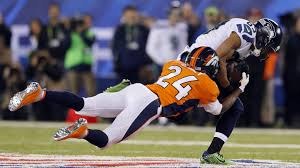
Champ Bailey
Denver Broncos
Cornerback, Denver Broncos and Washington; Pro Football Hall of Fame, class of 2019
12-time Pro Bowl selection, 52 career interceptions
“I can run faster, jump higher, and have less fatigue. I would highly recommend Springbak® Springsoles to enhance athletic performance.”

Todd Christensen
Raiders / BYU
Former BYU and Raiders tight end
2-time champion, 2-time NFL receptions leader, 5-time All-Pro
“One innovative idea grew into a patented, ultra-thin performance product used by athletes across many different sports.”
Portrait from Springbak's legacy film.


Quotes as published by Springbak. Photographs are from Springbak's own testimonial image and legacy film; team marks visible in them belong to their respective owners. Endorsements are personal and do not imply endorsement by the NFL or any club. Individual results vary.
On the record
What players reported and researchers measured
A football player's published personal experience, not a laboratory measurement. Individual results vary.
“I can run faster, jump higher, and have less fatigue. I would highly recommend Springbak® Springsoles to enhance athletic performance.”
Weber State force plate testing
What the standing result means before the snap
In Weber State's standing force-plate test, more than twice the force was required to displace a person standing on Springsoles compared with standing without them. A lineman's three-point stance, the first two steps into a block and a receiver's plant at a route break are football applications, not the laboratory task. The finding does not establish a stronger anchor against a pass rush, a faster release or better control through contact, and it says nothing about fourth-quarter fatigue or injury prevention.
Source: Weber State University Human Performance Laboratory balance and stability evaluation, sponsored by the BYU Department of Gerontology and reviewed by Dr. Michael Yessis, Dr. Robert Wiswell (USC), and Howard Gray, PhD (BYU). See the full breakdown on Proof & testing.
Force-Plate Stability Study
Researchers compared standing resistance to displacement with and without Springsoles — the full testing account is on Proof & testing.
Holding a pass-protection base, redirecting a rush and planting to break a receiving route combine movement and opponent contact that the lab task did not include. Using Springsoles in compatible cleats for those situations is an intended application, not evidence of better blocking, faster cuts, reduced collision forces, greater strength or less fatigue across a game.
Results are from the force-plate testing described in U.S. Patent No. 6,589,630 B1. Individual results vary.
More athlete results → /testimonials · Study details → /proof · Try the core challenge → /edge/the-springbak-challenge
FAQ
Football insoles — frequently asked questions
What are the best insoles for football cleats?
+
When comparing cleat inserts for football or football performance insoles, look at thickness, material, installation, fit in your own cleat and what evidence supports the product. Also check whether the product adds to or replaces the factory liner, and how it affects lockdown in your cleat. Effects on fit and feel vary by product and cleat model. Springbak® Springsoles are a 3/32-inch resilient 1,4-polybutadiene layer designed to compress and return toward its shape; energy return is the intended material function, not a measured football-performance result.
Can you put insoles in football cleats?
+
Many football cleats can take a thin added layer, but it depends on the cleat. Try the Springsole untrimmed first. If the factory liner is removable, try the Springsole underneath it. If it is lightly glued, remove it only if it releases cleanly with gentle, steady pressure; if it tears, stretches, deforms or resists, stop, leave it in place and put the Springsole on top. Never force out a firmly bonded or stitched liner. Make sure it lies completely flat, then confirm fit, heel position, lockdown, lace tension and plate feel in your own cleat. The same rule applies to turf shoes and trainers: try it untrimmed, place it under a removable liner or on top of one that resists, and confirm fit in each pair.
Do Springsoles work in low-profile speed cleats?
+
Compatibility varies by cleat. Low-profile speed cleats are often snug, so try the Springsole untrimmed first, make sure it lies completely flat, and check actual fit, heel position, lockdown and lace tension. Trim only if necessary, in very small amounts from the toe or forefoot, rechecking after each trim.
What is the difference between a Springbak® layer and a carbon-fiber insole?
+
Carbon-fiber insoles vary by model; many are stiff plates, and some are full-length or add noticeable thickness, which can change how the forefoot bends or how a cleat fits. A Springsole is a thin 3/32-inch resilient elastomer layer designed to compress under load and return toward its shape. Whichever you compare, check fit, lockdown and feel in your own cleat.
Are they legal for high school and college football?
+
Rules can vary by school, state association, league and governing body. Springbak does not treat product design or past athlete use as governing-body approval. Check the current equipment rules for your league, school or association, and ask the appropriate official if you are unsure.
Do Springsoles work in both linemen's and skill-position cleats?
+
The same thin resilient layer can be used in compatible cleats for different positions, from linemen to skill players. The Weber State test measured standing resistance to displacement — more than twice the force was required to displace a person standing on Springsoles compared with standing without them — and it did not measure stability during play, cutting or blocking for any position. Football-position performance outcomes were not directly measured. Confirm fit and lockdown in your own cleats.
Do football insoles actually improve performance?
+
The Weber State study did not measure football performance. It found that more than twice the force was required to displace a person standing on Springsoles compared with standing without them — a standing resistance-to-displacement measurement. Individual results vary.
Will they loosen my cleats or cause blisters?
+
Correct, completely flat installation and a careful fit check are important. Confirm heel position, lockdown and lace tension in your own cleats, and stop using them if they create pressure, rubbing or poor lockdown.
How many games will they last?
+
Durability depends on how often you play and practice, the surface, your footwear and use. The elastomer was selected for resilience; check the layer periodically and replace it if it no longer lies flat or has worn.
Do they help with hard turf and field-turf pounding?
+
Turf use is an intended application. Impact reduction, pain reduction and injury prevention were not directly measured. If you have pain, talk with a qualified clinician.
How do Springsoles help linemen stay balanced and grounded?
+
More than twice the force was required to displace a person standing on Springsoles compared with standing without them in Weber State force-plate testing — a standing resistance-to-displacement measurement, not a test of blocking performance, playing strength or lineman effectiveness. Springbak does not claim the insole increases muscle strength; Howard Gray, PhD, described a strength-and-stability effect under laboratory conditions, which is his interpretation of that standing result. Football involves short, max-effort movements from a stance, which is why coaches train balance, but the test did not measure balance or performance during play. Use in a three-point stance is an intended application, not a measured outcome.
What does "more than twice the force to displace" mean for a football player?
+
It means that, in a standing test, more than twice the force was required to displace a person standing on Springsoles compared with standing without them. For players who work from a stance, that is a possible, intended application — not proof of better blocking or anchoring, which were not measured.
Springbak® Springsoles
Checking price…Ships from the USA · 30-day no-questions-asked returns
Team pricing for football programs
Outfit a full roster — linemen, skill positions and specialists each in their own cleat — with Springbak® Springsoles. We offer volume pricing, invoice billing and fast turnaround for verified high school, club and college football programs.
Team pricing and bulk orders → /shop#team-form
Train for football
Football Lineman Power
Eight weeks of first-step force, pad-level strength and short-area drive for athletes who win or lose a rep in one second.
Open programFootball Skill-Position Speed
Seven weeks for receivers, backs and DBs: top-end speed, route-breaking deceleration, and the ability to do both on the last drive.
Open programSpeed & Acceleration
Six weeks of short, sharp work aimed at footplant time and stride length — the two levers that actually move a 40 time.
Open programSprint Mechanics & Top Speed
Technical sprint work focused on acceleration, upright mechanics and top-speed running for football athletes.
Open program
Read more on The Edge
All Edge articlesSpringbak® — MADE IN THE USA. Individual results vary.
Last updated 2026-08-26.